Hospitals
Caring for patients on hospital wards with limited mobility requires continuous observation, timely intervention, and efficient use of staff resources. LYNG by Ably Medical is designed to support ward teams in meeting these demands through an integrated, bed-based monitoring solution.
Want to know more?
Leave your contact information and we will send you the presentation with more detailed information about LYNG.

Continuous insight into patient activity and physiological condition
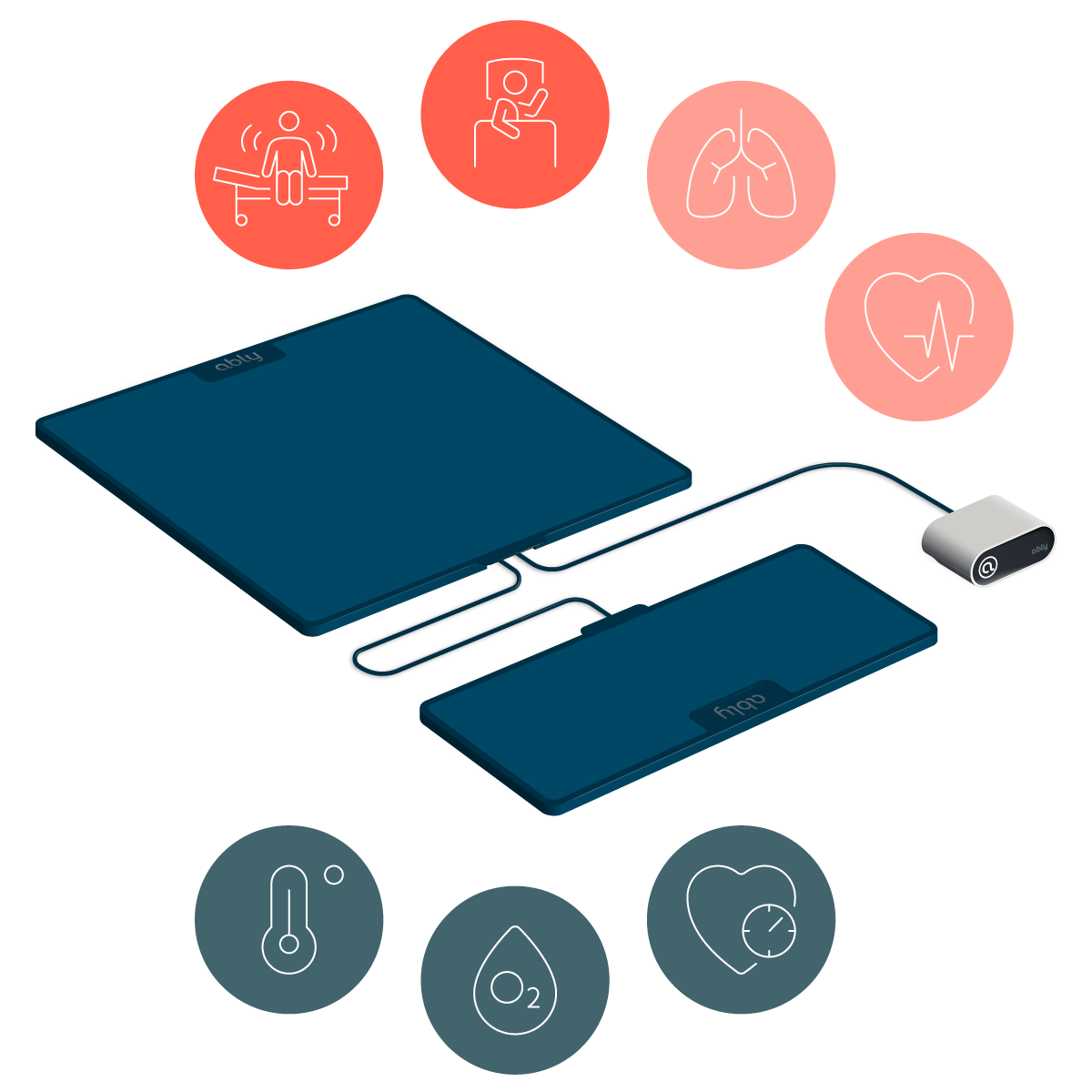
LYNG by Ably Medical is a medical device for hospital beds, providing non-intrusive, continuous monitoring of patient activity and physiological status. The system combines tracking of presence, in-bed movement, and bed exits with clinically validated measurements of heart rate (HR) and respiration rate (RR), delivering a single, integrated view of the patient’s overall condition.
Movement data and vital sign trends support assessment of patient stability and timely response to changes. Configurable notifications alert staff to bed exits, changes in activity, and deviations in HR and RR, while repositioning reminders support routine care and pressure injury prevention.
LYNG also supports integration with compatible third-party medical and non-medical devices, enabling consolidated monitoring without added workflow complexity. By reducing manual checks and routine documentation, LYNG helps nurses maintain continuous oversight while focusing on direct patient care.
*The clinically validated HR and RR measurements and full Class II medical device functionality described above are planned for availability in 2027, subject to successful Class II medical device certification.
What sets LYNG apart?
All-in-one patient monitoring
By combining continuous movement monitoring with clinically validated HR and RR measurements, LYNG delivers a unified view of patient activity and physiological condition from a single, bed-based system.
Patient safety
Continuous insight into movement, bed exits, and vital sign trends supports early awareness of changes in patient condition and timely intervention.
Workflow efficiency
Reduced reliance on manual checks and multiple devices supports consistent workflows across shifts and helps wards make better use of existing staffing resources.
Staff well-being
Structured observation and reduced routine documentation help nurses focus on direct patient care while limiting physical and cognitive strain, especially during night shifts.
Cost efficiency
A single, bed-based monitoring solution reduces dependence on multiple monitoring devices and repetitive manual observations.
Automated documentation
Movement data and vital sign trends are recorded continuously and can be transferred to hospital systems where supported, improving continuity across teams and shifts.
Configurable notifications
Notifications can be tailored per patient and ward routine, supporting awareness while minimizing alarm fatigue.