Bettausstieg und Bewegung
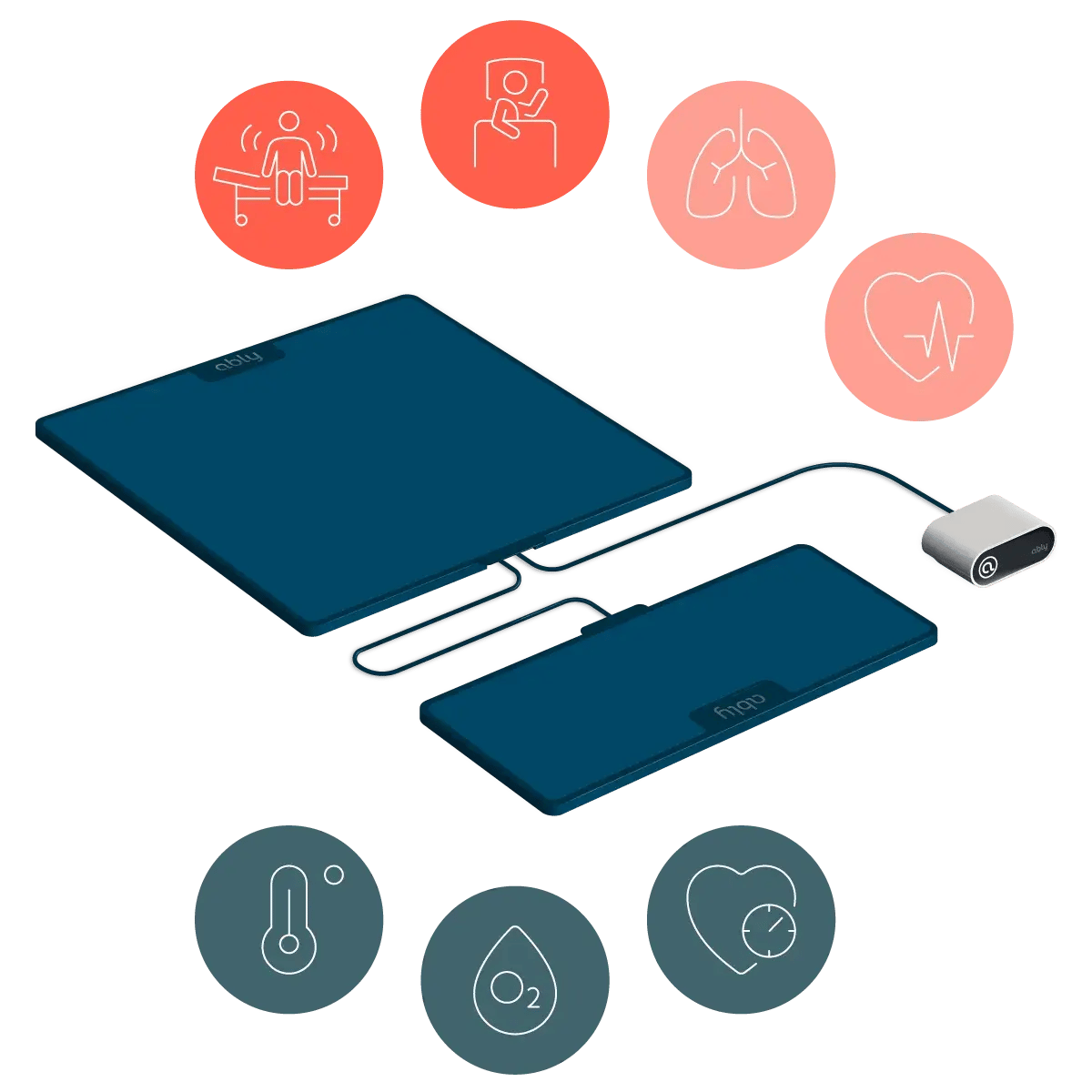
Ungestütztes Verlassen des Bettes und längere Abwesenheit vom Bett sind häufige Probleme auf Stationen mit Patienten, die in ihrer Mobilität eingeschränkt sind. LYNG wird unter die Matratze gelegt und überwacht die Anwesenheit und Bewegung im Bett.
Das Stationspersonal kann Benachrichtigungen konfigurieren, um das Pflegepersonal zu alarmieren, wenn ein Patient das Bett verlässt oder länger als erwartet außerhalb des Bettes bleibt, auch während der Nachtschichten.
Kontinuierliche HR- und RR-Überwachung
LYNG bietet indikative Messungen der Ruheherzfrequenz und der Atmungsfrequenz, die als Trends und zeitbasierte Durchschnittswerte dargestellt werden. In Kombination mit Bewegungsdaten und Informationen von angeschlossenen medizinischen und nicht-medizinischen Geräten von Drittanbietern unterstützen diese Messungen die Bewertung des Gesamtzustands des Patienten und die frühzeitige Erkennung von Veränderungen, die möglicherweise Aufmerksamkeit erfordern.
Trendansichten helfen klinischen Teams, die Kontinuität der Pflege über Schichten hinweg aufrechtzuerhalten und unterstützen die Beobachtung von Patienten, die nur begrenzt in der Lage sind, Beschwerden oder Verschlechterungen mitzuteilen.
*LYNG arbeitet aktiv an der Zertifizierung als Medizinprodukt der Klasse II. Im Rahmen dieser Umstellung wird LYNG in der Lage sein, validierte Herz- und Atemfrequenzmessungen für den klinischen Einsatz bereitzustellen.
Meldungen zur Neupositionierung
Bei Patienten mit eingeschränkter Mobilität überwacht LYNG die Bewegungen und Positionsänderungen im Bett über einen längeren Zeitraum. Benachrichtigungen können das Bewusstsein für längere Immobilität schärfen und das Pflegepersonal bei der Planung von Umlagerungen und Routinepflegeaktivitäten unterstützen.
Das System unterstützt die Beobachtung und Koordination im Rahmen bestehender Pflegeprotokolle und ersetzt nicht die etablierten klinischen Praktiken.
Was zeichnet LYNG aus?

All-in-One-Patientenüberwachung
Durch die Kombination von kontinuierlicher
Bewegungsüberwachung mit indikativen HR- und RR-Trends bietet LYNG einen einheitlichen Überblick über die Aktivitäts- und Ruhemuster des Patienten mit einem einzigen, bettbasierten System.

Sicherheit der Patienten
Kontinuierliche Einblicke in Bewegungen,
Bettausgänge und indikative HR- und RR-Trends unterstützen die frühzeitige Wahrnehmung von Veränderungen der Aktivitäts- und Ruhemuster des Patienten.

Effizienz der Arbeitsabläufe
Die geringere Abhängigkeit von manuellen Kontrollen und mehreren Geräten unterstützt konsistente Arbeitsabläufe in allen Schichten und hilft den Stationen, die vorhandenen Personalressourcen besser zu nutzen.

Wohlbefinden des Personals
Strukturierte Beobachtung und reduzierte Routinedokumentation helfen dem Pflegepersonal, sich auf die unmittelbare Patientenpflege zu konzentrieren und gleichzeitig die körperliche und kognitive Belastung zu verringern, insbesondere während der Nachtschichten.

Kosteneffizienz
Eine einzige bettenbasierte Überwachungslösung verringert die Abhängigkeit von mehreren Überwachungsgeräten und wiederholten manuellen Beobachtungen.

Automatisierte Dokumentation
Bewegungsdaten und indikative HR- und RR-
Trends werden kontinuierlich aufgezeichnet und
können, sofern unterstützt, an Krankenhaussysteme übertragen werden, was die Kontinuität zwischen Teams und Schichten verbessert.
Konfigurierbare Benachrichtigungen
Die Benachrichtigungen können auf den Patienten und die Stationsroutine zugeschnitten werden, um die Aufmerksamkeit zu erhöhen und die Alarmmüdigkeit zu minimieren.
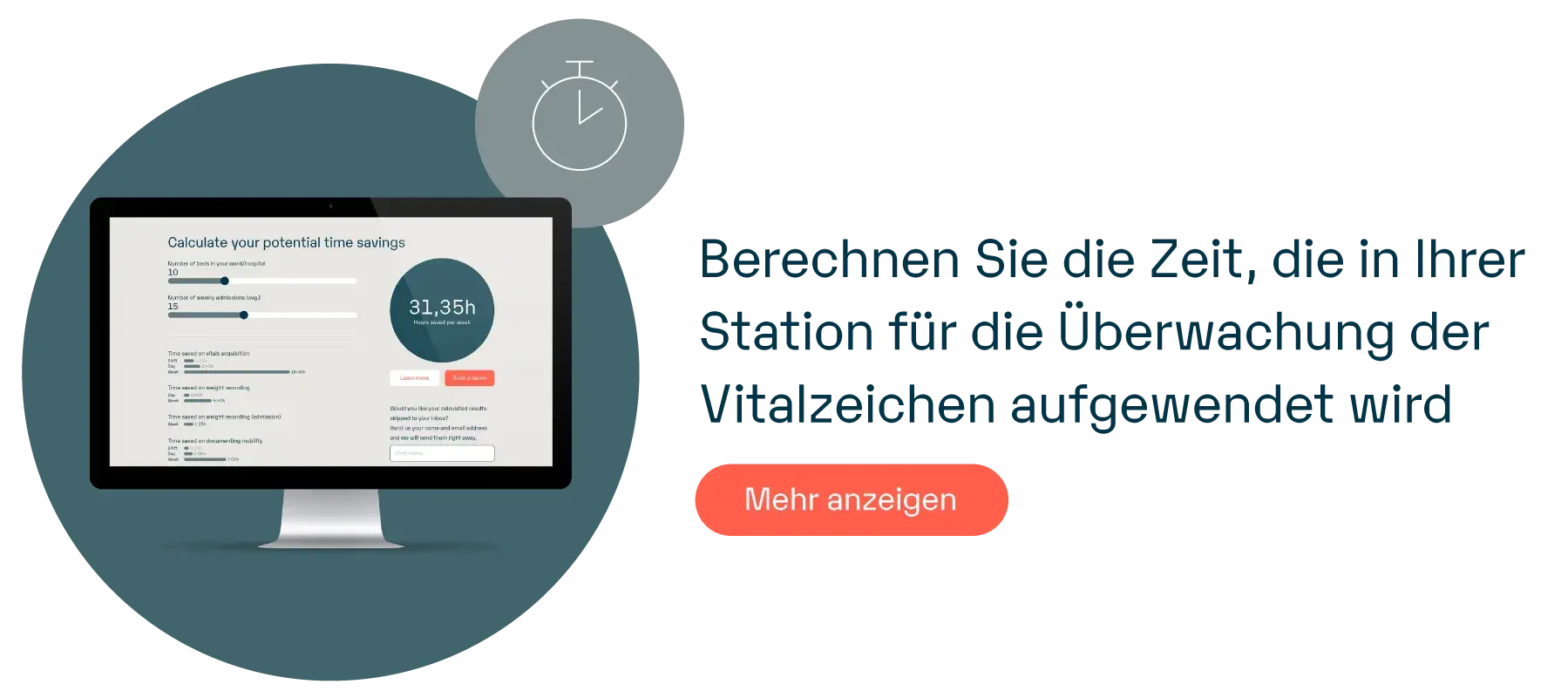
Wie viel Zeit wird für Routinekontrollen aufgewendet?
Auf vielen Stationen und Pflegestationen nehmen Aufgaben wie die Überwachung der Vitalparameter, die Dokumentation und die Gewichtserfassung einen erheblichen Teil des Arbeitstages in Anspruch.
Studien aus deutschen Krankenhäusern zeigen, dass das Pflegepersonal auf einer 10-Betten-Stationetwa 31 Stunden und 35 Minuten pro Woche mit der Erfassung von Vitalparametern, der Gewichtsmessung und der entsprechenden Dokumentation verbringt.
Diese Zeit ist Teil der täglichen Pflegearbeit - aber es ist Zeit, die nicht für die direkte Interaktion mit dem Patienten verwendet wird.
Bei einem geschätzten durchschnittlichen Pflegeaufwand von 40 € pro Stunde entspricht dies etwa1.260 € pro Woche an Personalzeit, die für Routineüberwachungsaufgaben aufgewendet wird.
Nutzen Sie unseren Rechner, um herauszufinden, wie diese Zahlen in Ihrer eigenen Einrichtung aussehen könnten - basierend auf Ihrer Bettenzahl und Personalstruktur.